
What is functional endoscopic sinus surgery (FESS)?
Functional endoscopic sinus surgery (FESS) is performed through the nostrils using rigid endoscopes. The aim is to open selected sinus drainage pathways, remove obstructing inflammatory tissue or polyps where appropriate, and improve access for ongoing topical treatment.
When might FESS help sinusitis or nasal polyps?
FESS may be considered for selected patients with chronic rhinosinusitis or nasal polyps, recurrent acute sinusitis or other specific sinus conditions when the expected benefit outweighs the risks and non-surgical treatment has been appropriately explored.
Advanced and image-guided sinus surgery
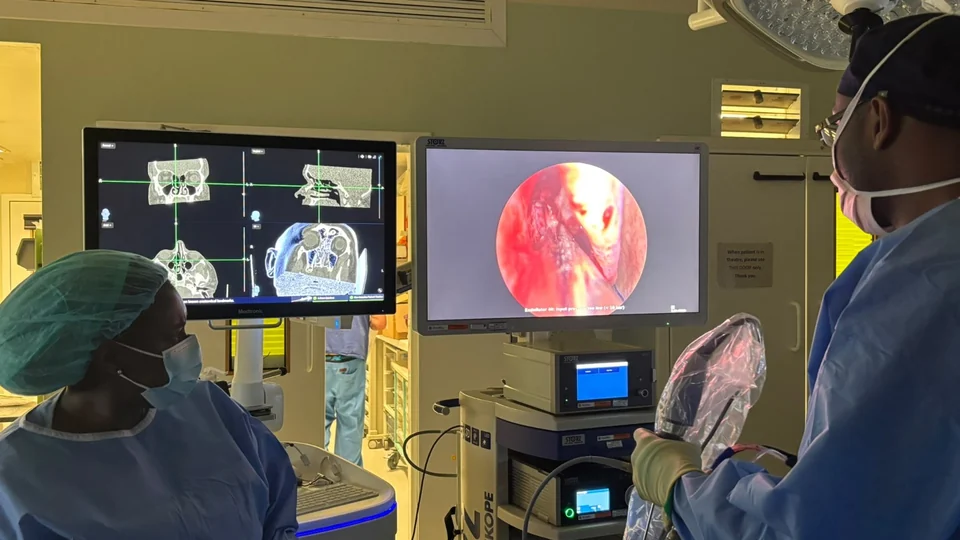
My fellowship training and consultant practice include advanced endoscopic sinus surgery and frontal sinus procedures. In selected cases, I use image guidance to help navigate the detailed anatomy of the sinuses.
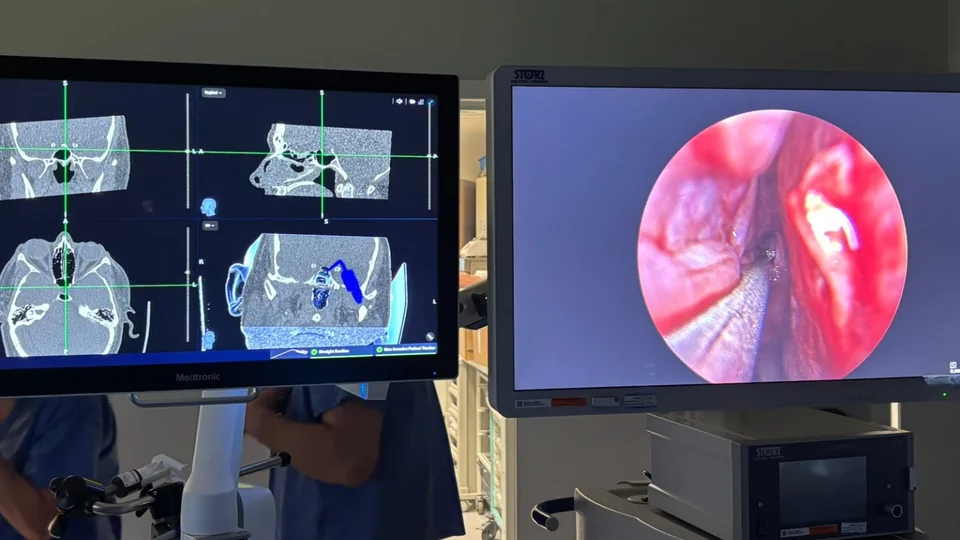
Image guidance links your CT scan with the position of tracked surgical instruments during the operation. It provides an additional anatomical reference alongside the endoscopic camera view, helping me identify where an instrument lies in relation to the sinuses, eye sockets and skull base.
This can be particularly helpful for revision sinus surgery, extensive nasal polyps, or disease involving the frontal and deeper sinuses. Navigation supports my anatomical knowledge and surgical judgement; it does not remove the risks of surgery.
I will discuss whether image guidance is appropriate for you, taking account of your CT scan, previous treatment and the facilities available at your treating hospital.
A UK first in NHS practice
On 26 October 2026, my NHS ENT unit at East Kent Hospitals University NHS Foundation Trust became the first in the UK and the second in Europe to use Medtronic’s Stealth AXiS™ ENT Navigation System for endoscopic sinus surgery. The manufacturer confirmed this UK-first milestone.
Steroid-eluting stents for the frontal and ethmoid sinuses
In selected cases, I use steroid-eluting stents in the frontal and/or ethmoid sinuses to help maintain patency of the sinus openings after surgery. This means helping to keep these openings open during healing. The stents release corticosteroid locally, and I discuss their suitability as part of your individual surgical plan.
Assessment before endoscopic sinus surgery
- Detailed symptom history and previous medical treatment
- Nasal examination and usually endoscopy
- Review of CT imaging when surgery is being planned
- Discussion of asthma, allergy, aspirin sensitivity and relevant comorbidity
- Discussion of realistic goals and the need for long-term postoperative care
FESS risks, recovery and aftercare
All surgery carries risks. For endoscopic sinus surgery these can include bleeding, infection, adhesions/scarring, persistence or recurrence of symptoms and need for further treatment. Rare but important complications relate to the eye socket or skull base because of their proximity to the sinuses. Your individual risk profile is discussed as part of consent.